

By Paul Uglum, president, Uglum Consulting, LLC
All successful plastic decorating depends to some extent upon several common factors. One of these is the manufacturing environment as defined by the temperature, humidity and air pressure (elevation). Another is the chemistry of the substrate being decorated. One often overlooked factor is the static charge that may or may not be present on the part.
Electrostatic charge can be both useful and problematic. It is a critical part of several plastic decorating processes, but it also can lead to manufacturing defects in other processes. In the worst case, it can create dangerous conditions. Ignoring static charge is not an option.
One definition of static electricity is an imbalance of electric charges within or on the surface of a material. Another way of looking at it is as isolated, motionless charges. The term “static” is used to distinguish it from current electricity, in which an electric charge flows through an electrical conductor. Static electricity is the electrical charge that accumulates on the surface of an object and remains at rest. A static charge either can be positive or negative and tends to dissipate over time, depending on the material’s resistance.
The term electrostatic (or static charge) commonly is used to refer to the voltage measured on the surface of an object. (In actuality, the charge is the parameter associated with the voltage on the surface of an object and its capacitance, where Q [charge] = C [capacitance] times V [voltage].) The “static charge” (voltage) present on the part depends upon the amount of charge on the material and the capacitance of the material. For a given charge, the lower the capacitance, the higher the voltage. Since plastics have low capacitance, the voltages can be very high.
Creating Static Charge
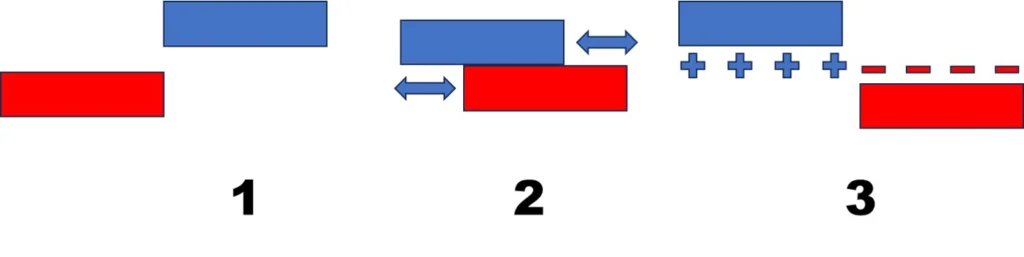
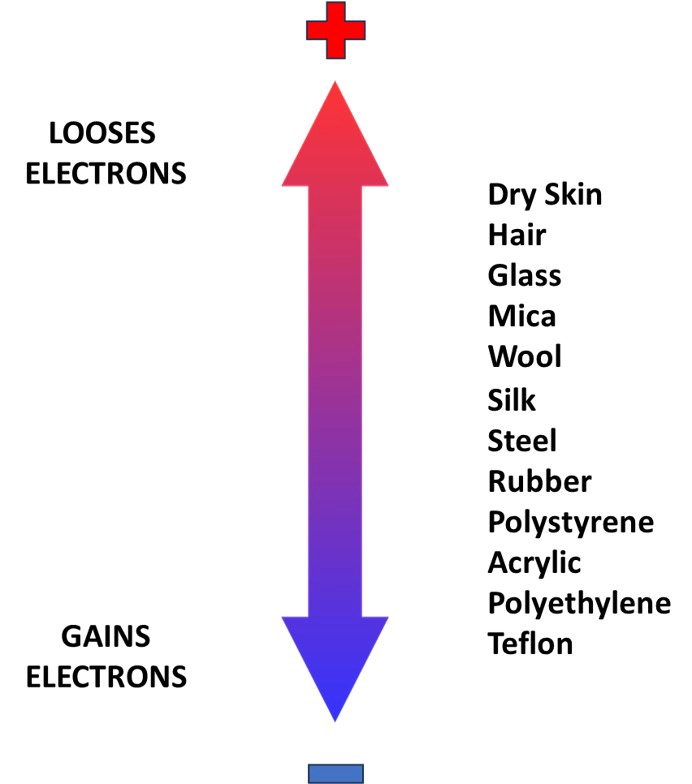
Static charge is created in three primary ways: friction, separation and induction. When two surfaces are rubbed together, the surface atoms come into close contact and surface electrons can move from one material to the other. The direction they move depends upon the Triboelectric Series. Materials on the positive side tend to lose electrons, and materials on the negative side gain electrons. The greater the force applied, the greater the exchange of electrons. This means that any operation that allows dissimilar materials to rub against each other can cause static charges on the plastic part (see Figure 1).
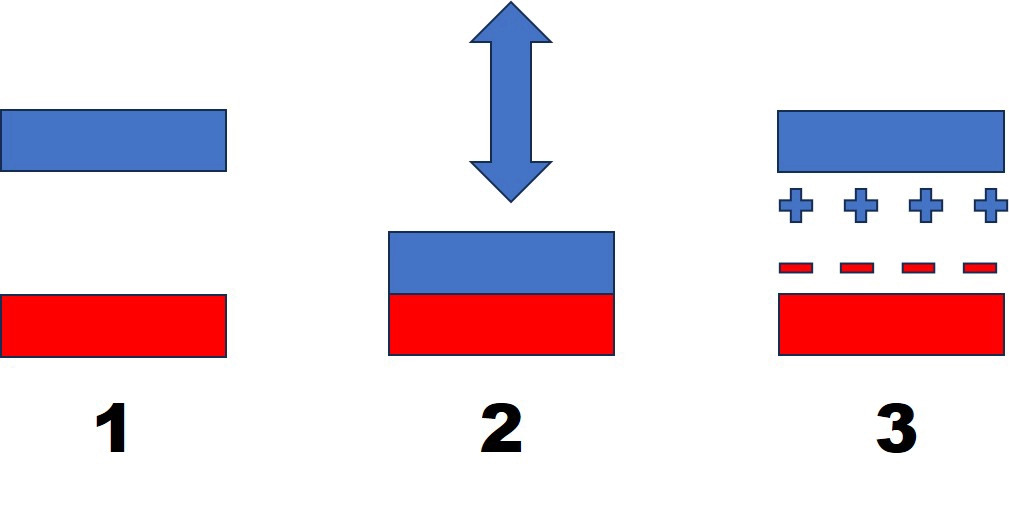
Likewise, when two dissimilar materials are in contact, electrons tend to adhere to one or the other side, again depending upon the Triboelectric Series. The faster the parts are separated, the higher a charge is generated. This means that high-speed operations like web printing potentially can create static charges, which must be removed (see Figures 2 and 3).
Finally, static charges can be generated in the presence of a strong electric field. For example, a material in close proximity to a positive voltage will tend to be positively charged. This property can be used when applying a static charge is desirable.
Static Charge from Plastic Molding
Processing plastic into useful shapes generates a static charge in two ways. The first way is by contact and separation, in which the plastic part ends up with more electrons on its surface. This is accentuated by the intimate contact of the plastic and the surface of the mold. The other way is that as the plastic cools, the cooling process leaves a net charge throughout the part’s entire volume. Over time, this charge migrates to the surface of the part, leaving a surface static charge. Because of this, it is important to understand the impact of static charge on the decorating process and to remove the charge prior to or during plastic decorating.
Issues with Static Charge
A variety of problems arise from the presence of static before or during the process of decorating a plastic part.
With all forms of plastic decoration, contamination from the environment is a serious issue. In some cases, such as high-gloss decoration and medical applications, significant countermeasures, such as cleanrooms, are needed to control the issue. Unfortunately, most plastic manufacturing processes, including handling, can impart a large static charge to the parts. This means that the parts will attract dust and fibers from the environment, which must later be removed. Particles in the 20-micron range require additional techniques beyond air blowoff for removal, even after the static charge is neutralized. This means it is important to deionize at the press and store parts in containers isolated from the environment prior to decorating.
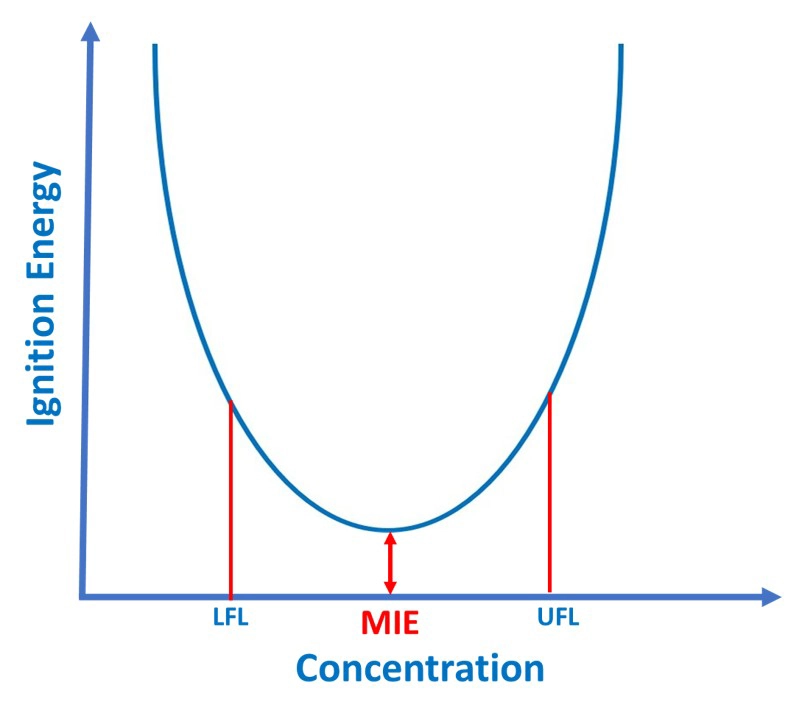
Many decorating processes use flammable, volatile solvent, that evaporate during the application process or during the curing process. To prevent fires and explosions, care is taken to avoid flammable concentrations and to avoid sources of ignition. This usually is accomplished by adding make-up air to keep the air-fuel ratio below the lower flammability limit and using explosion-proof equipment. One risk associated with static charges is the possibility of a spark leading to a fire. Someplace between the lower and upper flammability limit, there is a minimum energy required for ignition. Sparks from static discharge can exceed the energy needed to ignite solvents. This can be avoided by neutralizing the charge on parts and proper grounding of equipment (see Figure 4).
In processes such as spray painting, charged parts can attract overspray to the reverse side of the parts. This means that additional masking may be needed if the parts are not adequately fixtured and have the static charge removed.
Operator shocks, while sometimes painful, generally are serious only because of the reaction they cause. Shocks typically are the result of an accumulated charge or “battery effect,” as the combination of many charged parts can lead to very high charges. For example, if individual sheets of plastic with relatively low surface charges are stacked together or plastic parts are collected in bins, either can create very high voltages.
Positive uses of Static Charges
The presence of static electricity has a range of useful applications based on its ability to cause surfaces to attract and, in some cases, orient. These applications range from simple to complex and sophisticated.
In-Mold Labeling
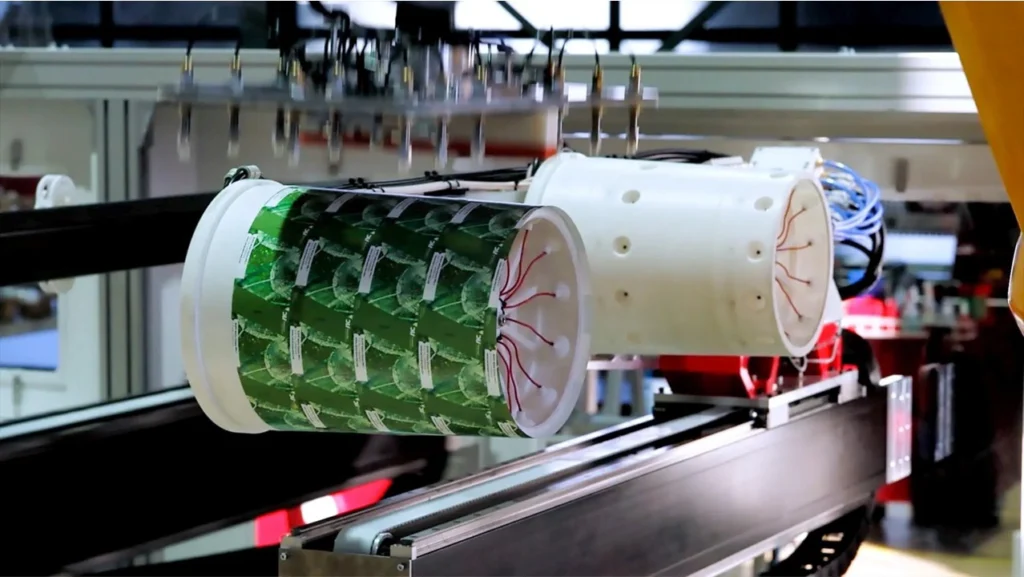
In high-speed in-mold labeling (IML), electrostatic charging is used to accurately position and hold the label inside the mold. Muller Technology integrates this approach into its automation systems, where the label is picked up on a semi-conductive core, electrically charged during transfer and then placed into the grounded mold cavity, where it is held securely in position.
This controlled charging process enables reliable placement without wrinkles or misalignment, even at high speeds. Key parameters – such as voltage level, timing and positioning – must be adjusted carefully depending on the label material, inks and geometry. After placement, the label bonds with the molten polymer during injection to form the final part. Residual static charge typically is removed after molding to ensure proper handling and cleanliness (see Figure 5).
Flocking
Another process relying on static charge is flocking. Flocking is the application of fine particles to adhesive-coated surfaces. This usually is achieved by applying a high-voltage electric field. In a flocking machine, the fibers are given a negative charge, and the plastic substrate is grounded. Flock material flies vertically onto the substrate, attaching to the previously applied glue. Flocking is used in many industries ranging from consumer goods to high-tech military applications. In the automotive industry, it is used for both decoration and to reduce sun reflection.
Other Applications
Coating also may be accomplished using static charges. Electrostatic coating is a manufacturing process that employs charged particles to paint a workpiece more efficiently. Since this technique requires the target to be conductive, and most plastics are not conductive, it is beyond the scope of this article.
Processes Impacted by Static Electricity
Some processes are more sensitive to static charge than others. Also, certain processes, by their nature, create static charges that must be managed.
Inkjet
As technology and materials continue to improve, inkjet direct-to-part decoration is an ever increasingly popular option. Inkjet’s ability to produce photo-quality images in a wide range of applications makes it a desirable solution in plastic decorating. Still, there are some fundamental issues, including the susceptibility to the static charge on the part being decorated. Because the drop size is so small, a high static charge on the part can cause issues with overspray and drop misplacement. Static charge also can draw contaminants from the air, leading to nozzle failure. This can lead to a manufacturing interruption for cleaning and maintenance. The solution is to use anti-static bars just prior to printing and maintaining proper humidity and grounding.
Web Coating, Converting and Printing
Web printing is very useful in high-volume applications such as decorated packaging. Unfortunately, it is a process that readily introduces static charging issues. These can result in jams, downtime and quality issues. Static in the web can attract dust and dirt, leading to printing defects. Shocks can cause operators to have dangerous physical reactions close to high-speed machinery and can create fire issues with solvent-based coatings and inks. The solution is to implement anti-static countermeasures and to use continuous monitoring in critical areas.
How to Manage Static Charge
There are several ways to eliminate static charge, thereby reducing the impact on subsequent processes. The fundamental concept for neutralizing static charges is the same regardless of technique. It is to bring the charge back into balance by removing excess electrons or by adding electrons to the surface. This typically is accomplished in one of three ways: moving electrons through the material itself (often not an option with plastics), moving electrons through another material in contact with the surface or moving electrons through ionization of the surrounding air. It also is possible to remove the charge by electrostatic discharge, or sparking, if the voltage is high enough. This generally is an undesirable option and means the other countermeasures have failed.
Ionizers work like air purifiers for electricity. They release positive and negative ions that neutralize the surface charge on plastics. Several types of ionizers exist based on different technologies.
Radioactive (nuclear) powered (α or β particles) atomizers use radiation to strip electrons from air molecules, making both positive and negative air ions. These are attracted to the part and neutralize the charge. Nuclear ionizers do not produce as many ions as electric-powered ionizers, and the quantity of ions decreases over time because of the half-life of the radioactive material. They also are subject to strict regulation.
Passive ionizers rely on the close proximity of a grounded conductor to the charged part. They can be used with web processes and feature points that concentrate the electric field. While effective on high field strengths, they are not very effective with field strengths below 1000 V/cm.
Active electrical ionization works by using high voltage to ionize air. Alternating current ionizers produce large amounts of both positive and negative air ions. Direct current ionizers produce only on the polarity of air ion. Both are available in various designs specific to the intended application. Electric ionizers are effective on all but the highest field strengths, and some versions use blowers or compressed air to drive the ions to the part.
Controlling the environment always is important for plastic decoration. When static is an issue, the relative humidity should be maintained between 45% and 65%. Low humidity increases the risk of static charge.
Grounding is critical in machinery, manufacturing processes and workstations. Although it is an indirect solution, it prevents discharge events and, as a result, enhances safety.
Other methods of controlling, preventing and reducing static charge either can interfere with the decorating technologies or add unnecessary cost. These include anti-static coatings and conductive fillers for the plastic.
How to Measure Static Charge
In order to manage static voltage, it is important to be able to measure it. There are two basic types of instruments used to measure the voltage or field potential on the surface of the part.
Electrostatic voltmeters measure the actual potential (voltage) at the surface of the part. These use non-contact sensors that can measure voltage over a range of millivolts to several thousand volts. The probe-to-surface spacing is generally about 0.1 inch.
Electrostatic fieldmeters measure the electrostatic field produced by a charged surface at some distance away from the surface. The distance from the surface must be known in order to get an accurate measurement. For near-field measurement, the relationship between voltage and distance is linear. Electrostatic fieldmeters also are known as static meters or static locators.
Conclusion
Like any naturally occurring phenomenon or property, static electricity can be inconvenient, devastating to a process or a useful tool. It is important to understand how processes are affected by static charge and how to control static charge in plastics. Most of all, it is important to be able to measure the presence or absence of static charge. As with all aspects of plastic decorating, understanding, measurement and control are the keys to success.
Paul Uglum has 43 years of experience in various aspects of plastic materials, plastic decoration, joining and failure analysis. He owns Uglum Consulting, LLC, working in the areas of plastic decoration and optical bonding. For more information, send comments and questions to paul.a.uglum@gmail.com.
Thank you to Travis Baker, Muller Technology, for his valuable input (www.muller-technology.com).