

The Automotive Division of the Society of Plastics Engineers (SPE®) today announced the winners for its 55th annual Automotive Innovation Awards Program, the oldest and largest recognition event (established in 1970) in the automotive and plastics industries. The announcement was made on the evening of November 4, 2026, during the 55th SPE Automotive Innovation Awards Gala held at Laurel Manor in Livonia, Michigan, USA.
The Body Exterior Category winner is also this year’s Grand Award winner. The Grand Award winner is selected from the winners of each of the eight part categories by a panel of Blue Ribbon Judges who are industry experts. This year’s winners are:
GRAND AWARD & BODY EXTERIOR CATEGORY WINNER:
Thermoplastic Truck Bed
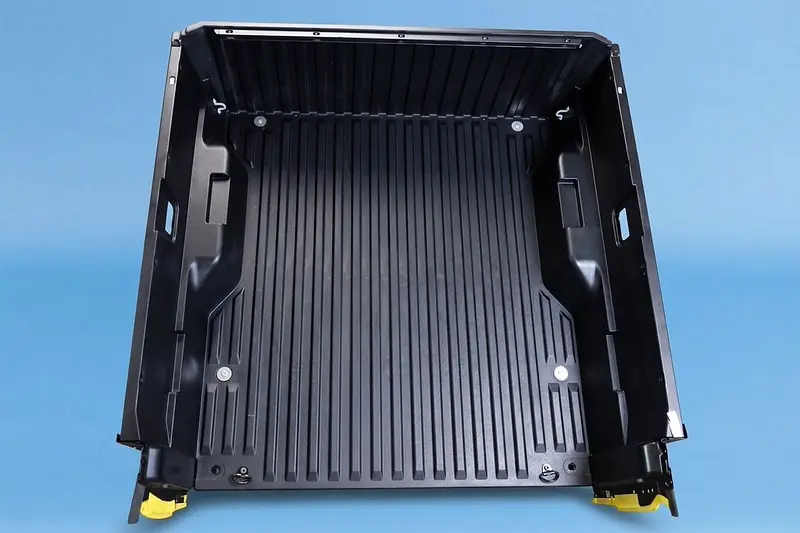
OEM Make & Model: 2026MY Toyota Motor Corp. Toyota Tacoma
System Supplier: Vuteq Corporation
Material Processor: Vuteq Corporation & Cascade Engineering
Material Supplier: BASF Corporation
Resin: Ultramid B3ZG10 HSP UV CCYD5 BK30564 PA6
Tooling Supplier: Haidlmair GmbH
Process: Injection Molding
This one-piece PA6 truck bed is considered the first injection-molded composite bed designed to compete with steel and thermoset beds. At roughly 30 kg per shot, it is also believed to be the largest injection-molded automotive part. BASF developed an impact-modified 50% glass-fiber PA6 for flow, stiffness and 8 years of UV stability, while a 105-micron molded-in grain eliminates A-side paint. Composite cross members and steel compression limiters are overmolded in the same cycle. Toyota and Engel designed a gargantuan 12,000-ton press to handle the 125-ton, 36-drop mold. Compared with SMC, the bed saves 0.6 kg and about 7% in part cost despite higher tooling cost. The part contains chemically recycled material, and all manufacturing scrap is recyclable, supporting circularity.
CATEGORY WINNER: Body Interior
Structural Console Bracket
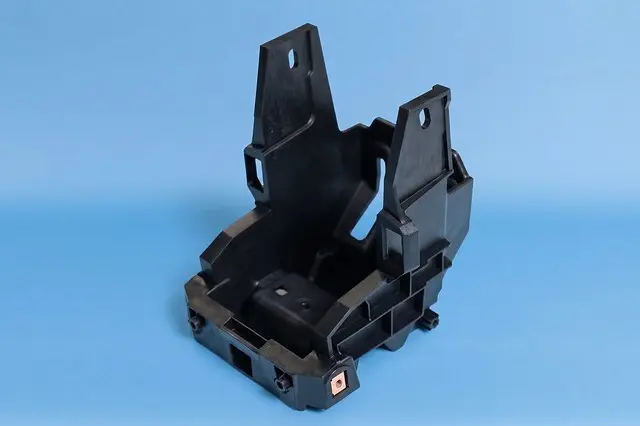
OEM Make & Model: 2027MY General Motors Co. Chevrolet Bolt EV
System Supplier: US Farathane
Material Processor: US Farathane
Material Supplier: Washington Penn
Resin: PRC100G2.5M1.5 PP + PIR
Tooling Supplier: Delta Tooling, Inc.
Process: Injection Molding
A single injection-molded bracket replaces a three-piece welded steel assembly as the structural bridge between the front and rear sections of a two-piece floor console. The bracket ties both sections to the lower body structure, controlling cross-car sway, cupholder shake and rattle while meeting a 900 N abuse load. Optimized rib architecture in a 25% glass-fiber, 15% mineral-filled PP homopolymer with 60% recycled content raises console modal frequency from 26.5 Hz to 27.37 Hz. Piece cost falls 83% and mass drops 45.8%, from 520.5 g to 282.0 g. Tooling lead time shrinks from 36 to 12 weeks, and eliminating multi-point welding removes weld-quality risk.
CATEGORY WINNER: Chassis/Hardware
Composite Tunnel Reinforcement
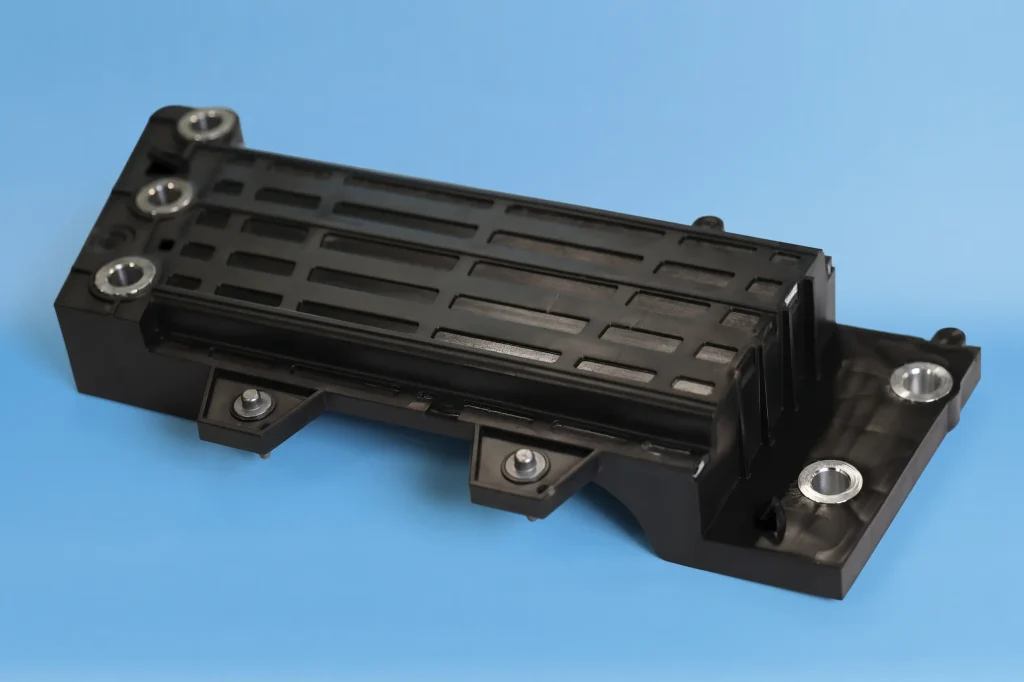
OEM Make & Model: 2026MY Stellantis Jeep Grand Cherokee
System Supplier: L&L Products
Material Processor: L&L Products
Material Supplier: BASF Corporation
Resin: Ultramid B3Z HP RC02 BK00464 PIR PA6
Tooling Supplier: L&L Products
Process: Pultrusion and Injection Overmolding
This underbody tunnel reinforcement transfers crash load from the outer sill rail to the transmission crossmember in small-overlap and side-pole impacts, keeping the tire out of the occupant space. A pultruded insert with 80% continuous glass fiber, overmolded with high-impact nylon, delivers ultra-high-strength steel performance at one-quarter the weight. The first composite version cut mass 40% vs. stamped steel. This next generation fits a new package with higher loads, carrying more than 100 kN with 20% higher strength and more than 10% further mass reduction. A new PA6 with 60% PIR content cuts carbon footprint 80% and improves impact by 89%. Eliminating one compression limiter saves half a pound of nylon.
CATEGORY WINNER: Electric and Autonomous Vehicle Systems
Cosmetic and Structural GMT Frunk
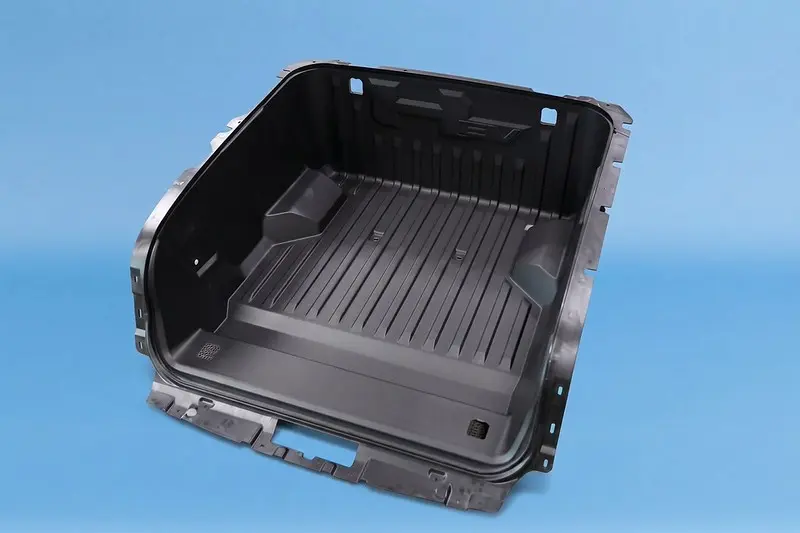
OEM Make & Model: 2027MY General Motors Co. GMC Hummer EV
System Supplier: Hanwha Advanced Materials
Material Processor: Hanwha Advanced Materials
Material Supplier: Hanwha Advanced Materials
Resin: Profuse30 GMT & UD45 GMT
Tooling Supplier: Dong-A ENG Co., Ltd. & Kyungwon ENG Co., Ltd.
Process: Compression Molding
Billed as the industry’s first customer-facing frunk to co-mold unidirectional and standard GMT, this Hummer EV frunk replaces 1.8-density structural SMC with 1.2-density glass mat thermoplastic. A 30% glass GMT forms the body while 45% unidirectional glass GMT, placed by robot, reinforces the floor locally to carry a 75 kg knee load with no more than 10 mm deflection and minimal body support. One-shot compression molding delivers a Class-A surface with no carpet. Ultrasonic welding replaces pumpable adhesives and enables end-of-life recycling. Mass fell 34.2%, cost fell 33.75%, and the part reached 100% PPAP in one month. Consistent fiber length, orientation and placement were controlled to optimize structural performance without compromising dimensional stability.
CATEGORY WINNER: Materials
Interior Door Handle Bezels
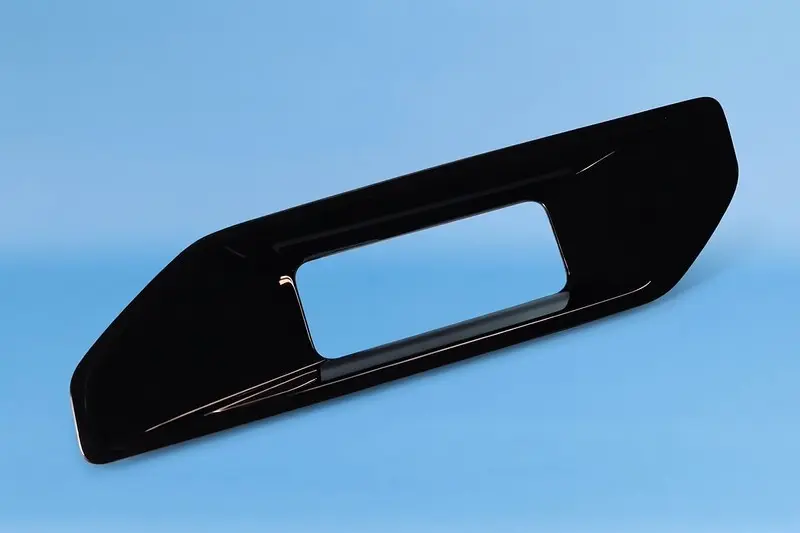
OEM Make & Model: 2026MY Ford Motor Co. Ford Everest
System Supplier: Supavut Industry Co., Ltd. – THAILAND
Material Processor: Supavut Industry Co., Ltd. – THAILAND
Material Supplier: BASF Corporation
Resin: Ultramid D3K R01 BK 23361 PA
Tooling Supplier: Sin Kwang Plastic Industries Sdn Bhd
Process: Injection Molding
In a Ford first, a pre-colored, unfilled PA6 blend delivers high-gloss piano black door handle bezels with no paint and no rapid heat and cool tooling. Previous paint-free executions needed specialty molds and presses. Here, a standard injection mold and press reproduce a mirror-polished cavity through a wall-thickness flow leader, which places the weld line where it is nearly invisible, and gating designed for maximum cavity pressure without parting-line flash. Additives provide scratch, mar and UV resistance for four bezels per vehicle in extreme-touch zones. Replacing painted ABS eliminates paint racks, paint scrap and VOCs, and the single-material part simplifies end-of-life recycling.
CATEGORY WINNER: Powertrain
Press In Place Engine Coolant Seal
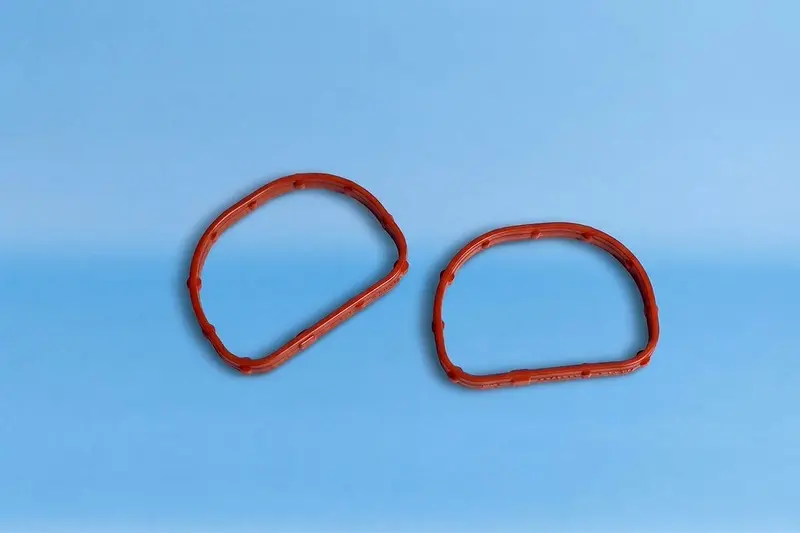
OEM Make & Model: 2027MY General Motors Co. Chevrolet Traverse, Buick Enclave, & GMC Acadia
System Supplier: Uchiyama Marketing & Development America LLC
Material Processor: Uchiyama Marketing & Development America LLC
Material Supplier: Zeon Chemicals, LP
Resin: J7201R Hydrogenated Acrylonitrile Butadiene Terpolymer (HNBR)
Tooling Supplier: Uchiyama Marketing & Development America LLC
Process: Injection Molding
Compact engines place coolant and oil seals side by side, where leaked oil swells traditional EPDM and risks coolant-oil mixing, overheating and engine seizure. Regarded as the industry’s first press-in-place coolant seal for a crankcase, this 3 mm x 5 mm seal uses a new HNBR terpolymer compound. Acrylonitrile provides chemical resistance, hydrogenated butadiene adds heat resistance, and proprietary third monomer maintains performance from 135° C to −40° C, with only 2% swell in oil vs. more than 50% for EPDM. Six thin stabilizer ribs prevent tipping in the groove, and four thick retention ribs prevent pop-out. The seal holds 30 psi coolant pressure and trims weight and cost about 30% each.
CATEGORY WINNER: Process/Assembly/Enabling Technologies
Thermoplastic Body Door Seal
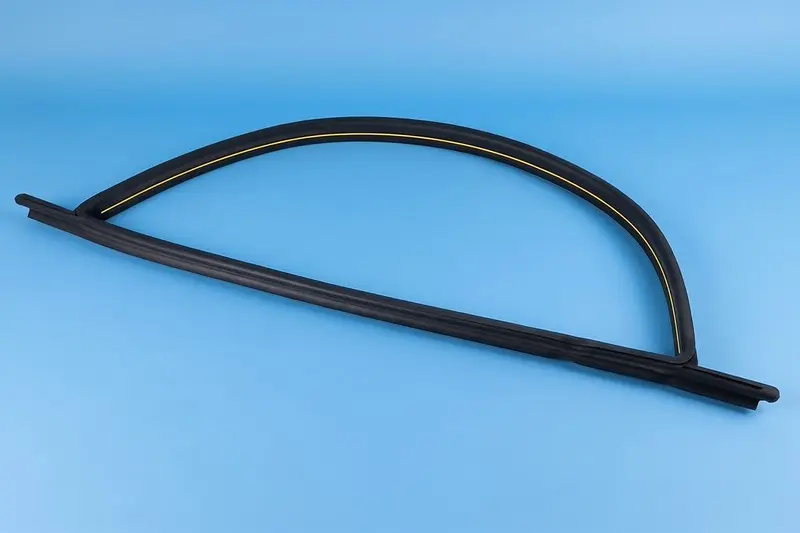
OEM Make & Model: 2027MY Volvo Cars Volvo, EX60
System Supplier: Cooper Standard
Material Processor: Cooper Standard
Material Supplier: Mitsubishi Chemical, Celanese, & Ravago
Resin: Tefabloc TPE-S, Santoprene TPV & Scolefin PP
Tooling Supplier: Cooper Standard
Process: Extrusion and carrier corrugation
Deemed the first fully thermoplastic body door seal, FlexiCore replaces the steel or aluminum carrier of traditional EPDM seals with Cooper Standard’s patented corrugated thermoplastic carrier. The 100% recyclable TPV, TPS and PP construction eliminates EPDM curing and spray coating, meets dynamic sealing requirements and adds a co-extruded skin colorable to match interior trim. Linear weight falls from 511 to 286 g/m, a 44% reduction worth 2.7 kg per four-door set, and frunk seals drop 31%. Carbon emissions fall 20%. Greater flexibility around corners speeds assembly up to 20%, and operators handle about a quarter ton less material per 200-vehicle shift.
CATEGORY WINNER: Sustainability
Fuel Pump Module Subcomponents
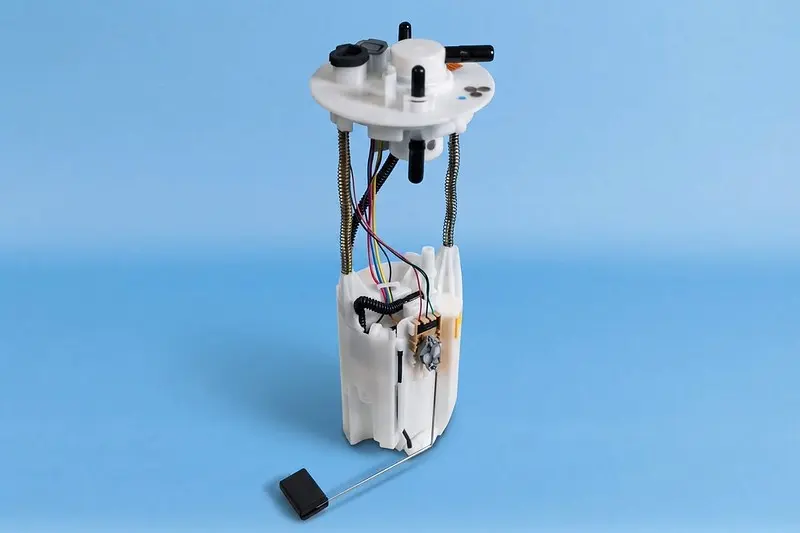
OEM Make & Model: 2026MY Toyota Motor Corp. Toyota Tundra
System Supplier: Aisan Corporation of America
Material Processor: Enplas (U.S.A.) Inc.
Material Supplier: Celanese
Resin: Celcon ECO-C M90 C872 POM
Tooling Supplier: Enplas (U.S.A.) Inc.
Process: Injection Molding
In the first known automotive application of carbon-captured POM, Toyota Tundra fuel pump module subcomponents now use Celanese Celcon ECO-C M90. Carbon dioxide captured from industrial emissions is combined with hydrogen to make methanol and then POM, cutting the material’s production CO₂ by 90%. Because the resin is chemically identical to standard M90, with matching flow, modulus, strength, impact and heat deflection values, the switch required no mold, molding condition or design changes. Toyota approval took two months instead of the typical two to three years. Production began in April 2026, reducing module carbon footprint 4% now, with a 30% target by 2029.
CATEGORY WINNER: Hall of Fame Award – First Use of Santoprene® TPV for the Glass Run Channel on the 2002 Jeep® Liberty
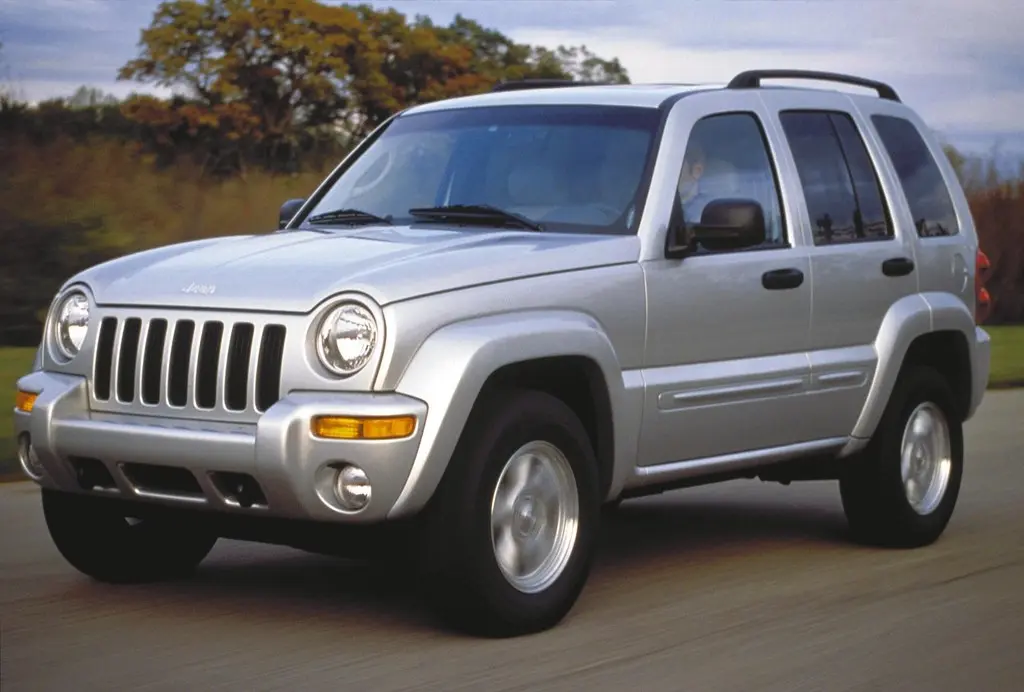
The industry’s first application of Santoprene® TPV (Thermoplastic Vulcanizate) for a glass run channel (extruded profile in which car windows slide up and down), replacing EPDM (Ethylene Propylene Diene Monomer) thermoset rubber, on the 2002 Jeep Liberty is named the 2026 SPE Automotive “Hall of Fame” Winner. This innovation reduced weight, cut manufacturing costs, improved performance and enabled material recyclability.
The weight savings were a 30% – 50% reduction compared to EPDM rubber, enabling improved vehicle fuel efficiency. Manufacturing costs were reduced due to process efficiencies including less energy consumption, less capital investment and more efficient use of space. Performance benefits included rubber-like sealing (against weather, dust and noise) with better long-term compression set at service temperatures, and improved long-term appearance (no surface blooming with heat aging). Recyclability of the thermoplastic material compared to EPDM rubber thermoset enabled sustainability improvements.
Representatives from Stellantis accepted the award at the event. The honor was shared with Cooper Standard (who acquired Jyco, the original System Supplier and Molder/Processor), and Celanese (who acquired the Santoprene TPV business from ExxonMobil in 2021).
To be considered for a Hall of Fame (HOF) Award, an automotive plastic or composite component must have been in continuous service in some form for 15 years or more, made a significant and lasting contribution to the application of plastics in automotive vehicles and broadly adopted and/or expanded upon in the automotive industry. Additional HOF award criteria include that the nomination be: game changing; very successful worldwide; innovative in materials, process and application; and still being used. This application certainly qualifies, as TPV Glass Run Channels are now an industry standard globally.
CATEGORY WINNER: Lifetime Achievement Award – Tom Pickett
Tom Pickett, Lead Materials Engineer at General Motors Co., was named the 2026 Lifetime Achievement Award winner by the Automotive Division of the Society of Plastics Engineers (SPE®).

For over forty years at General Motors, Tom has led innovative plastic materials, processing and design in Exterior, Interior and Powertrain automotive applications. He is responsible for a myriad of novel and groundbreaking plastics automotive applications contributing to the advancement of plastics in the automobile.
Industry innovator Tom Pickett has amassed an impressive portfolio of 11 patents, two trade secrets and four defensive publications, marking significant advancements in polymer materials, design, assembly and processing.
Pickett’s contributions to manufacturing precision and extrusion technology are anchored by a suite of interconnected patents. These include proprietary methods and hardware for advanced manufacturing, such as a specialized method of controlling gloss extrudate, an auxiliary die for gloss control, an extrusion die stabilizer guide and an interlocking stabilizer. Together, these processing innovations provide manufacturers with unprecedented control over material flow, surface finish and structural stability during production.
In the realm of advanced product assembly and component design, Pickett has secured essential patents that streamline how complex parts bond and function. This segment of the portfolio features a system for multi-material part attachment, a high-efficiency adhesive tape release liner and a method for creating a grained appearance plastic part.
Furthermore, Pickett’s design expertise extends into high-performance automotive aerodynamics and exterior trim, captured in patents for a unique two-piece rear spoiler attachment and a low-stress attachment system tailored specifically for plastic decorative applications. A groundbreaking automotive breakthrough is a novel mechanical interlocking mechanism designed to neutralize the Coefficient of Linear Thermal Expansion (CLTE) in elastomeric seals for battery box applications, solving a critical sealing challenge in modern electric vehicles. This comprehensive collection of intellectual property underscores Pickett’s role in shaping the future of polymer engineering, offering robust solutions that bridge the gap between complex chemical processing and practical, real-world manufacturing.
The mission of SPE is to promote scientific and engineering knowledge relating to plastics worldwide and to educate industry, academia and the public about these advances. SPE’s Automotive Division is active in educating, promoting, recognizing and communicating technical accomplishments in all phases of plastics and plastic-based composite developments in the global transportation industry. Topic areas include applications, materials, processing, equipment, tooling, design and development.
For more information, visit https://speautomotive.com/spe-automotive-div-innovation-awards/.