

By Liz Stevens, writer, Plastics Decorating
In-mold labeling has long been valued for its durability and visual impact, but the technology is entering a new chapter – one defined by sustainability demands, novel substrates and smart packaging capabilities. The sector is experiencing significant growth across various domains, from peelable labels designed to enhance consumer engagement and promote reusability, to labels optimized for end-of-life circularity by separating during the recycling process. Additionally, advancements include in-mold labeling (IML) applied in molded fiber, as well as the integration of digital watermarking and RFID technologies for product traceability.
At the 2025 Plastic Product Decorating Summit, Maurizio Carano, director of Innovation and Marketing, MCC Global IML helped to unpack these developments, examining what’s driving adoption, what’s holding it back and what’s coming next for in-mold labeling growth.
Sustainability and recyclability are major selling points for IML. Peelable IML adds another option for customers looking for reusability. What is peelable – or removable – IML?
Maurizio Carano, MCC Label: We look at peelable and removable as two distinct features. Peelable, for me, is fascinating because I would say packaging is the most important thing – to protect products, to deliver shelf appeal and so forth – until it’s not. Once it has been used, it becomes a burden; people don’t know what to do with it.
Peelable IML represents a great opportunity for growth for retailers, brands and consumers. During use, a label could serve double duty. A fillable coupon could be added to the label to further engage customers from a brand point of view. It could be an application for reusable packaging, because with a labeled cup, for example, there could be refilling opportunities with a coupon that customers could take to get their reusable cup refilled.
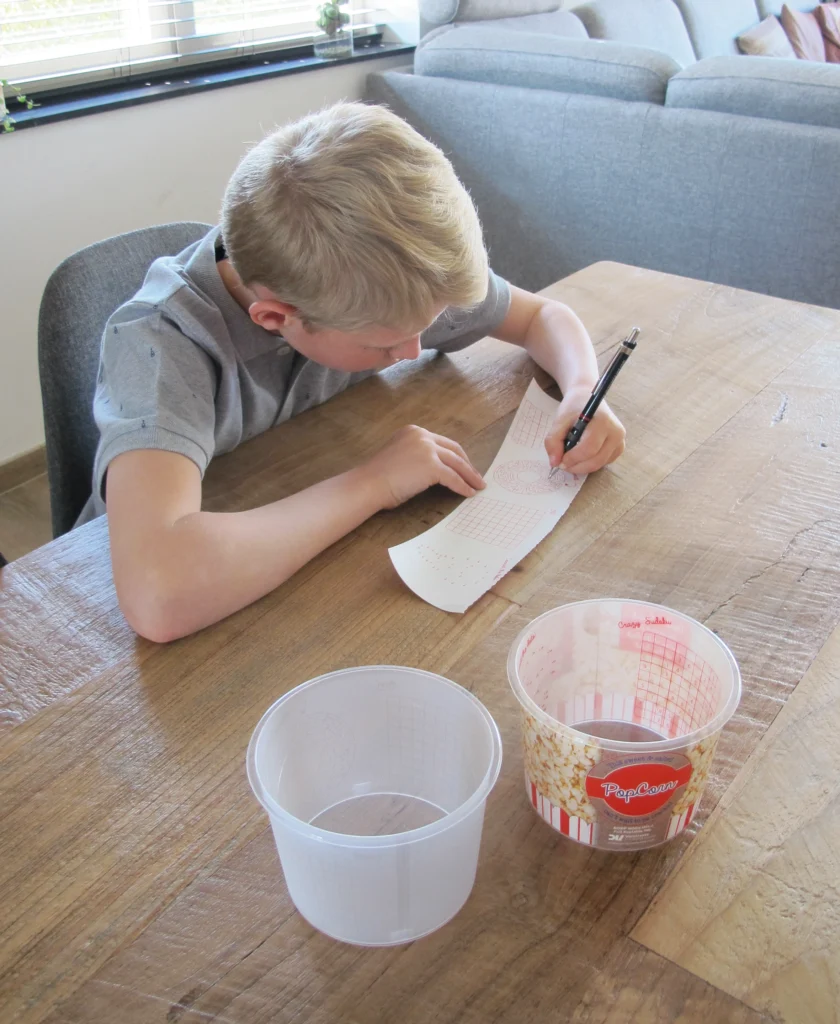
After use, in terms of engagement, a crossword puzzle could be added with print on the inside of the label (see Figure 1). And on top of all that, the package can be cleaned, leaving a reusable container that also is unprinted – and so it is easier to recycle or reuse. So, there can be a lot of advantages in application in that field.
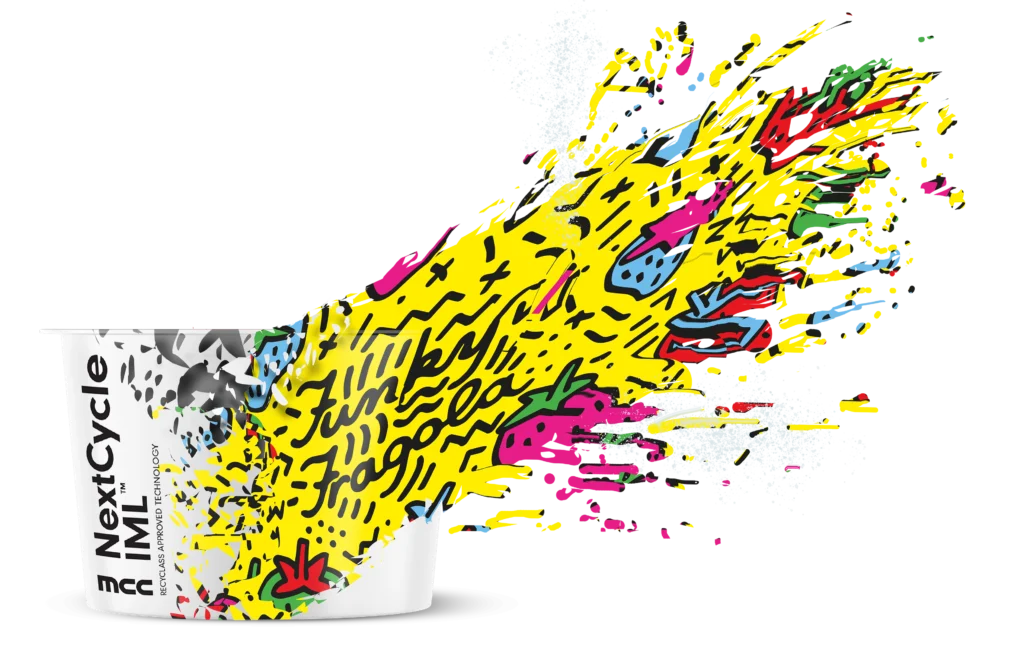
When it comes to removable IML labels, this is almost an ‘existential’ necessity for IML in the near future. From the recycling perspective, the EU Packaging and Packaging Waste Regulation (PPWR) is going to be implemented in 2028-30. At the moment, an IML-decorated container is recyclable by any measure under current legislation, but PPWR will change that – not all IML-decorated containers will be categorized as recyclable under the new framework. So, removable IML has a terrific component of EPR cost savings and total cost of ownership for a producer, but in some cases, it is simply the right to play. Compliance may demand these types of solutions (see Figure 2).
IML has recently been explored in combination with molded fiber. Can you describe that application and how it works?
Carano: The process is very similar to thermoforming. With dry molded fiber, the fiber is molded and the label adheres to the base – very similar to the in-mold labeling process. I recently was at a molded fiber conference, and the industry is watching and waiting as there is still some uncertainty on the real size of the opportunity. To deliver water resistance, some kind of material needs to be added, and that usually makes it less recyclable.
While we are doing a lot of plastic label printing at the moment, the origins of MCC Label included printing labels on paper. We’re going back to fiber, with plastic remaining by far our biggest substrate, and there’s a lot of capacity being built, especially in Europe, to address those needs. We’ve had several tests and pilots, and to be honest, we have a product that’s already in the market and we are selling it, but uptake is slow. Again, if there’s no legislation kicking in and enforcing a market shift, it’s very difficult to gain traction. But it is out there, and we have many active projects and a commercial product in the market.
Product security is a growing topic for IML, especially in food and personal care applications where there are regulatory requirements for product tracking and tracing. Technologies like RFID, variable data and Digimarc are part of that conversation. How does IML enable these security features?
Carano: Digimarc – the brand name for a proprietary invisible digital watermarking system – works through a license system. It’s an invisible watermark that can be scanned by a phone, and typically there is a double authentication process that allows you to verify that the content of a given package actually is authentic.
Diversion is a big thing – within retailers, and out there across the supply chain of stores. We’ve all seen the locked cabinets at stores where we need to find someone to unlock the case before we can buy our shaving kit or whatever. That time between the consumer deciding to purchase and then the act of finding someone to help the consumer touch the product actually takes sales away from retailers, because the consumer decides the extra effort is not worth it and they always have an online option in their hands, whether is it that retailer’s online channel or another one.
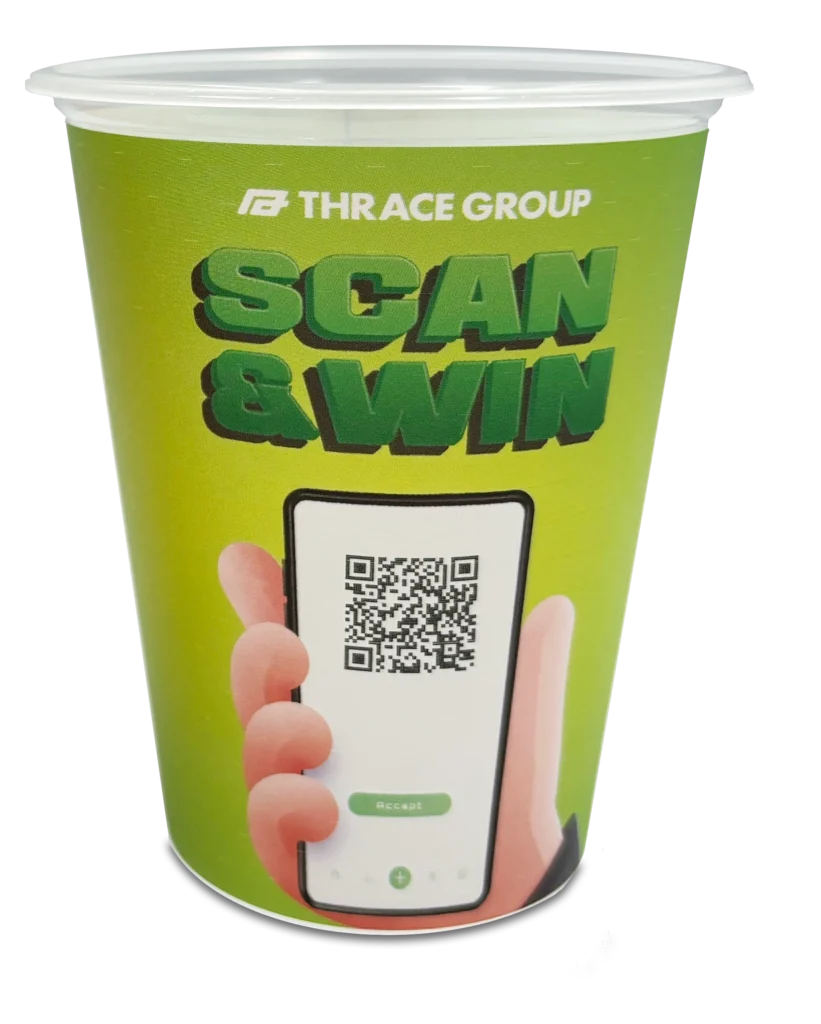
Technology can help solve the problem. Now, with variable coding, we can print every single label with an individual QR code. There is value in that for a brand – value in consumer engagement and in traceability (see Figure 3). The Transparency program implemented by Amazon, for example, requires a brand to serialize every single SKU they put in the market, so they can understand if there is diversion into other unwanted sales channels.
RFID technology is very popular right now, and it has reached a more mature level of commercialization since the cost has come down and the value is much more clear. I would argue that for some end uses, it might not always be the best fit. It is good for inventory management – answering questions like ‘where’s my stuff?’ and ‘how much do I have in storage?’ I’d debate the case for putting an RFID chip on a yogurt cup or on some other fresh items.
We always are talking about total cost of ownership: How much more is it going to cost, and what are the benefits that are going to be delivered? A variable QR code individualized by package always has value in terms of consumer engagement and there is almost no additional cost vs. regular printing.
What is the next innovation in IML that brands and OEM customers are starting to ask for?
Carano: Innovation often depends on the maturity of the market. There are some markets that are very mature, like Europe, where IML originally started and is well established.
In the US market, there still is a lot of runway to convert applications to IML – first, standard IML, then premium IML and then what you might call functionalized IML. That will be the progression as we see more adoption in the US.
And, while there’s always room for a new end market, most of the change will happen in areas where IML already is in play. I think sustainability is going to be a big driver of innovation because the decoration technologies already are there – it will be the compliance and sustainability requirements that push the next wave.
Conclusion
With in-mold labeling offering potential solutions for recyclability regulations, track-and-trace requirements and reduction of decorated-part production waste, IML’s value proposition continues to inflate. Research and development efforts and technology expansions – as well as regulatory decrees – offer opportunities to grow into new application areas.
For more information, visit iml.mcclabel.com. The 2026 Plastic Product Decorating Summit will be held September 1-3 in Sugar Land (Houston), Texas.
Learn more at www.productdecoratingevent.com.