

By Kenneth Stack, executive chairman, Engineered Printing Solutions
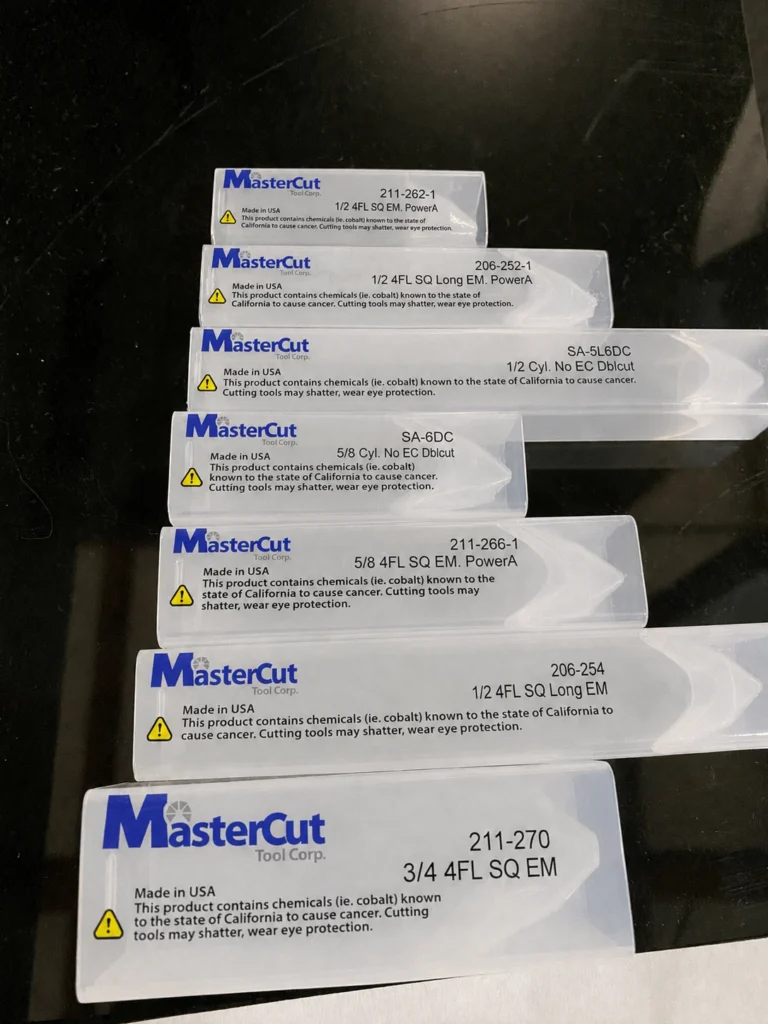
On a production line handling thousands of plastic tool cases per shift, decoration quickly can become a constraint. Each product requires clear identification, technical information and regulatory marking, and in high-SKU environments, no two items may share the same artwork. For manufacturers, this creates a challenge that goes beyond print quality, it becomes a question of how to manage variability without losing control of costs or throughput.
In industries that rely on rigid plastic packaging, this scenario is becoming increasingly commonplace. Whether the substrate is polypropylene or another molded polymer, the requirement is the same. Durable, legible print must be applied directly to the part, often in environments where exposure to oils, solvents and handling can compromise alternative solutions, such as labels.
MasterCut Tool, a US manufacturer of precision carbide cutting tools, operates in exactly this type of environment. With more than 20,000 active SKUs, each housed in an individual plastic case, the company must print unique part numbers, descriptions and regulatory warnings on every unit it ships. Production volumes vary widely, from short runs of specialized tools to continuous output of high-volume products and managing this efficiently demanded more than a single decoration process.
Moving Beyond Labels and Analog Print
For many manufacturers, pressure-sensitive labels are the starting point for product identification. While simple to apply, labels introduce ongoing material costs and add complexity to production, with stocking, handling and application required in demanding industrial settings. They also can fail due to poor adhesion or environmental exposure.
Analog processes, such as pad and screen printing, address some of these concerns but introduce their own challenges. Both rely on physical tooling, which means each product requires setup in the form of plates, clichés or screens. In a high-SKU environment, this leads to significant set-up time and cost. Changeovers disrupt production flow, and tooling management becomes a challenge in its own right.
Digital Inkjet and Artwork-Driven Production
Direct-to-object (DTO) inkjet printing changes this model by removing the need for physical tooling. Instead, the print process is driven entirely by digital artwork files. Each SKU is defined by its design file, allowing operators to switch between products without mechanical changeover.
For plastic components, this approach also supports consistent print placement and quality, provided the correct surface preparation and ink systems are in place. UV-curable inks combined with appropriate pretreatment provide the adhesion and durability suitable for industrial use, even on challenging substrates.
By eliminating tooling and reducing set-up time, digital inkjet enables what can be considered artwork-driven production. New SKUs can be introduced through design updates, allowing manufacturers to respond more quickly to changing product demands. However, while digital printing removes one constraint, it introduces another consideration. Not all jobs require the same production speed, and not all inkjet systems are designed to deliver it.
Multi-Pass and Single-Pass as Complementary Print Processes
Working with Engineered Printing Solution (EPS), MasterCut Tool implemented a production model that uses multiple multi-pass systems alongside a single-pass platform, directing each job according to volume and cost requirements.
Multi-pass inkjet systems are well-suited to the “long tail” of SKUs, as they allow frequent changeovers with minimal setup, making them ideal for short- and mid-run production. Operators can move quickly between jobs, maintaining flexibility without sacrificing print quality. Single-pass systems, by contrast, are designed for speed as they print the full image in one pass, driving the throughput required for continuous production runs. This makes them more effective for high-volume SKUs, where the priority is minimizing cost per unit through higher line speeds.
Optimizing Cost at the Job Level
A key advantage of this dual approach is the ability to make production decisions based on the specific characteristics of each job. Because both platforms operate from the same digital artwork files, there is no need to duplicate tooling or maintain separate workflows. This allows consistent output across the entire SKU range while giving production teams the flexibility to choose the most efficient path for each order. This type of job-level optimization shifts the focus from equipment utilization to overall production efficiency. Instead of fitting jobs to a single system, the system adapts to the job.
Practical Benefits on the Production Floor
For manufacturers, removing labels reduces material costs and eliminates a potential point of failure. It also simplifies the production line by removing an entire application step. In addition, the ability to switch between SKUs without tooling reduces downtime and improves responsiveness. Production can accommodate a wider range of orders without disrupting flow, which is particularly valuable in industries where customization and product variation continue to increase.
Durability is another important factor, as DTO printing, when properly configured, produces markings that are resistant to abrasion and chemical exposure. This is especially relevant for industrial applications, where plastic parts and packaging may be exposed to harsh conditions throughout their lifecycle.
Indeed, as SKU counts increase, additional products now are simply handled through new artwork rather than additional tooling, ensuring the decoration process scales alongside the growth of the business.
This approach is applicable to many other types of plastic decoration. For example, manufacturers of medical devices, automotive components and consumer goods all face similar pressures as product ranges expand and customization becomes more commonplace.
A Shift in How Decoration is Structured
The move to digital inkjet is not simply a change in printing technology; it represents a shift in how decoration is integrated into production. As MasterCut has shown for high-SKU plastic products, the balance between print flexibility and speed is becoming increasingly important.
With production demands continuing to evolve, effective print solutions that enable manufacturers to control costs while maintaining responsiveness are shaping the next stage of plastics decoration.