


Decorated plastic parts are everywhere in consumers’ lives. They are an important part of people’s cars, phones, homes and packaging for many of the products consumers purchase. Because the appearance is so important, plastic parts are subject to high standards, not only for the function of the parts but also for the appearance. Recent postings to the Society of Plastics … [Read more...] about Evaluating Appearance of Decorated Parts
Quality
Methods of Polymer Weld Quality Evaluation
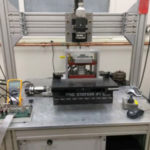
Evaluation of the quality of polymer welds is essential to the development and production maintenance of a welding process. However, it can be challenging to select an evaluation method due to the wide variety of options. A comparison of some popular weld quality evaluation methods is discussed in this article, as well as the preparation procedures for each and what can be … [Read more...] about Methods of Polymer Weld Quality Evaluation
Inspecting Surface Quality of Polymers – New Test Device

Adhesion problems across the plastics industry are prolific. Bonding of 2D and 3D products, plastic-to-plastic, plastic-to-metal and plastic-to-composite, can be nearly impossible without pretreatment. However, pretreatments alone do not solve the problems without accurate measuring and understanding the surface conditions of the substrates. Many companies use dyne solutions … [Read more...] about Inspecting Surface Quality of Polymers – New Test Device
Correlating Ultrasonic Weld Quality with Melt Layer Thickness
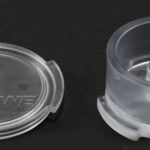
by Alex Savitski, Ph.D.; Leo Klinstein, Kenneth Holt, Hardik Pathak, David Cermak Dukane IAS, LLC Ultrasonic welding of thermoplastics is widely used by many industries to fuse together two parts in a short time without introducing additional consumables such as fasteners, adhesives or solvents. The process is fast, economical and easily automated, and it is commonly … [Read more...] about Correlating Ultrasonic Weld Quality with Melt Layer Thickness
Minimizing Contamination in a Production Environment

by John Kaverman, Pad Print Pros, LLC Minimizing contamination, rather than eliminating it, is a more realistic expectation because contaminants are everywhere. My mission for this article was to write about eliminating contamination, but as I thought about it, I realized that minimizing it is a more realistic expectation. Why? Because contaminants are everywhere: in and on … [Read more...] about Minimizing Contamination in a Production Environment